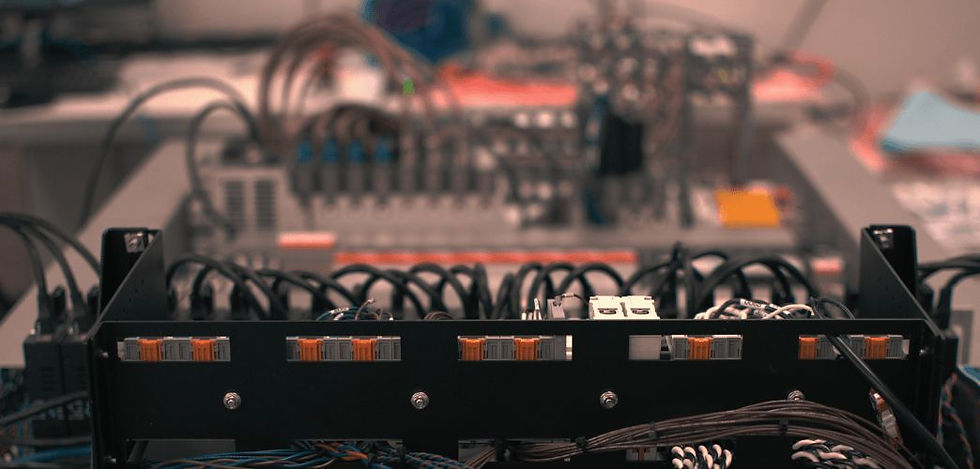
Precision Frequency Control for Cancer Treatment Machines
Precision frequency controller enhances radiation targeting accuracy in cancer treatment. Discover how a leading medical device manufacturer, developing next-generation tomotherapy equipment, used NI and Cyth technology to build a high-precision X-ray pulse controller.
Project Summary
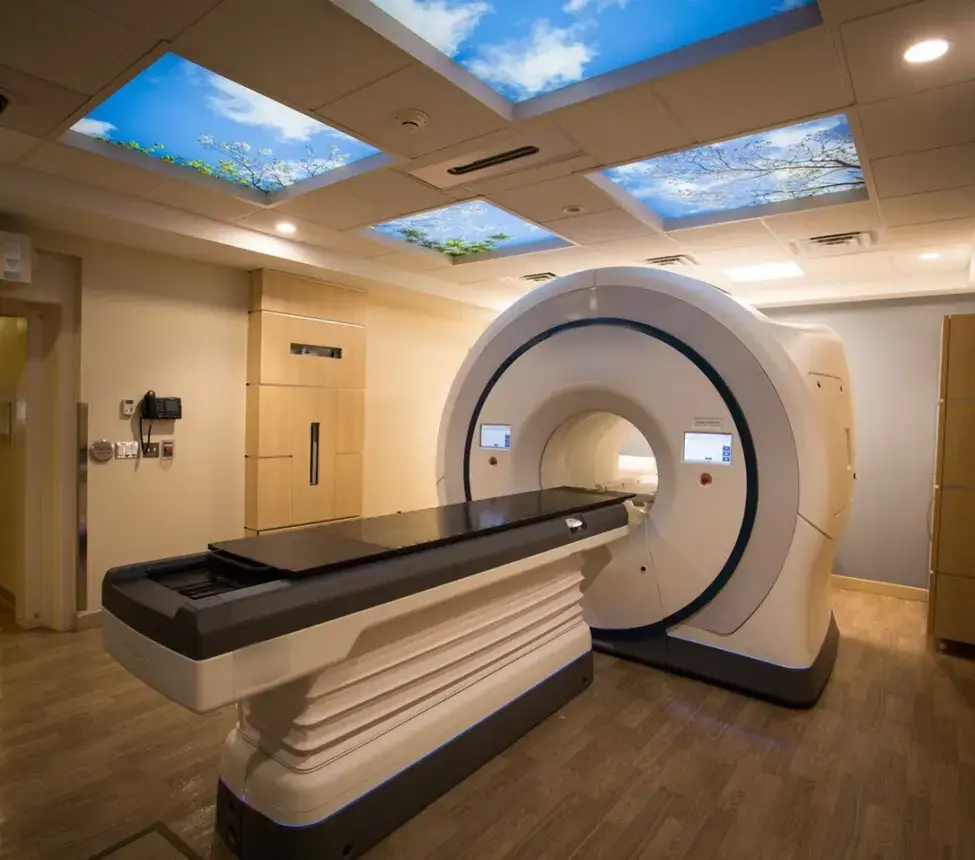
A leading medical device manufacturer developing next-generation tomotherapy equipment used NI and Cyth technology to design and develop a high-precision X-ray pulse controller.
System Features & Components
Microsecond-level pulse control, dramatically improving radiation targeting precision
Closed loop control down to 250μs intervals and beam power pulses up to 400μs
Real-time parallel control of three stepper motors for frequency, power, and focus adjustment
Accelerated the product’s prototyping phase and design validation phase by 4-6 months
Outcomes
The medical device manufacturer completed prototyping and design validation four to six months ahead of schedule, with a fully integrated, field-ready control system ready for downstream deployment and operator handoff.
Technology at-a-glance
NI sbRIO-9606 running 20MHz FPGA control loop
Cyth CircaFlex for I/O system integration and control loop design
LabVIEW control and automation framework
3-axis stepper motors
Radiation Guided by Real-Time Imaging
Tomotherapy is a cancer therapy modality that directs radiation doses directly to tumor sites minimizing exposure to healthy tissue. During operation, the surgical team performs a 3D CT scan to image the cancerous sites and transmits data wirelesssly to the tomotherapy device which orchestrates the delivery of pulsed radiation, typically in the X-ray band of the RF spectrum. A multi-leaf collimator acts in unison with the pulsing stage to permit or block radiation beams based on the imaging data. The overall effect is to provide precise, personalized treatment to the patient.
Pushing the Limits of Pulsed Radiation Control
A medical equipment company sought to develop a new tomotherapy surgical tool that pushed the technological envelope of pulsed radiation control and localization. In the early phases of the engineering design cycle, they needed to prototype and refine a mixed I/O system capable of microsecond-level pulse control. They also needed to validate the performance of this innovative medical device relating back to the overall effectiveness of treatment and patient recovery outcomes.
Real-Time Synchronization at Microsecond-Level Precision
The customer faced a complex real-time control challenge. They needed to synchronize the intensity-modulated radiation pulser (IMRP) delivering the X-ray energy with the CT scanner for positional feedback control. These system requirements translated to microsecond-level synchronization across multiple parallel control loops managing pulsed power, stepper motor positioning, and other system components.
These requirements exceeded the capabilities of standard programmable automation controllers (PACs), while developing custom circuitry would have consumed significant schedule time and budget resources. They evaluated using a system-on-chip (SoC), but integrating the electromechanical components of the system would be a challenge, nor did they have the in-house FPGA development expertise. The development team needed a solution that could bridge these gaps to provide high-performance control capabilities of FPGAs or custom hardware while keeping keeping the project on track.
Closed feedback loop running up to 20MHzm capable of 400us beam pulses
Pulse processing: 40 KHz pulse rate handling
Response time: Sub-microsecond control loop execution
3-axis stepper motor control

NI sbRIO and Circaflex for high-performance, multi-variable control
Control System Design
After refining the project requirements, the Cyth engineering team designed a control system capable of using NI Single-Board RIO (sbRIO-9606) paired with a CircaFlex mezzanine board to deliver the high-speed I/O and programmable control required for microsecond-level precision. The FPGA on the sbRIO, programmed in LabVIEW, enabled the primary control loop to run up to 20MHz while the CircaFlex extended the sbRIO’s I/O capabilities through high-accuracy analog readback from the beam pulser and other system components. To achieve the required positional accuracy, the solution digitizes and analyzes a high-speed pulsetrain providing for triggering capability and feedback control for three stepper motors that direct frequency, power, and focus parameters.

Software Integration
Built on the LabVIEW system design platform, the automated frequency controller (AFC) was extensible from the start. Working first to prototype the system, the Cyth team used CircaFlex to quickly interface with various system I/O and leveraged their exeperience with automation frameworks to refine the feedback controller. Software features include:
Control paradigm defined in software and compiled to the sbRIO’s onboard FPGA.
Hardware-triggered safety interlocks
Real-time system monitoring and user interface
Diagnostic capabilities for system bring-up and calibration

Working System Delivered in Ten Weeks
Following a 10-week design and build period, our team successfully delivered a working system delivered during a 2-day on-site visit focused on downstream system integration and usability. The Cyth team continued to support bring-up of the final product, including documentation, operator training, and calibration.
Related Posts
Automated End-of-Line Test System for High-Power Load Banks

Automated Quality Control for Material Deposition with LabVIEW
Automated Test Expansion for Electronics Manufacturing
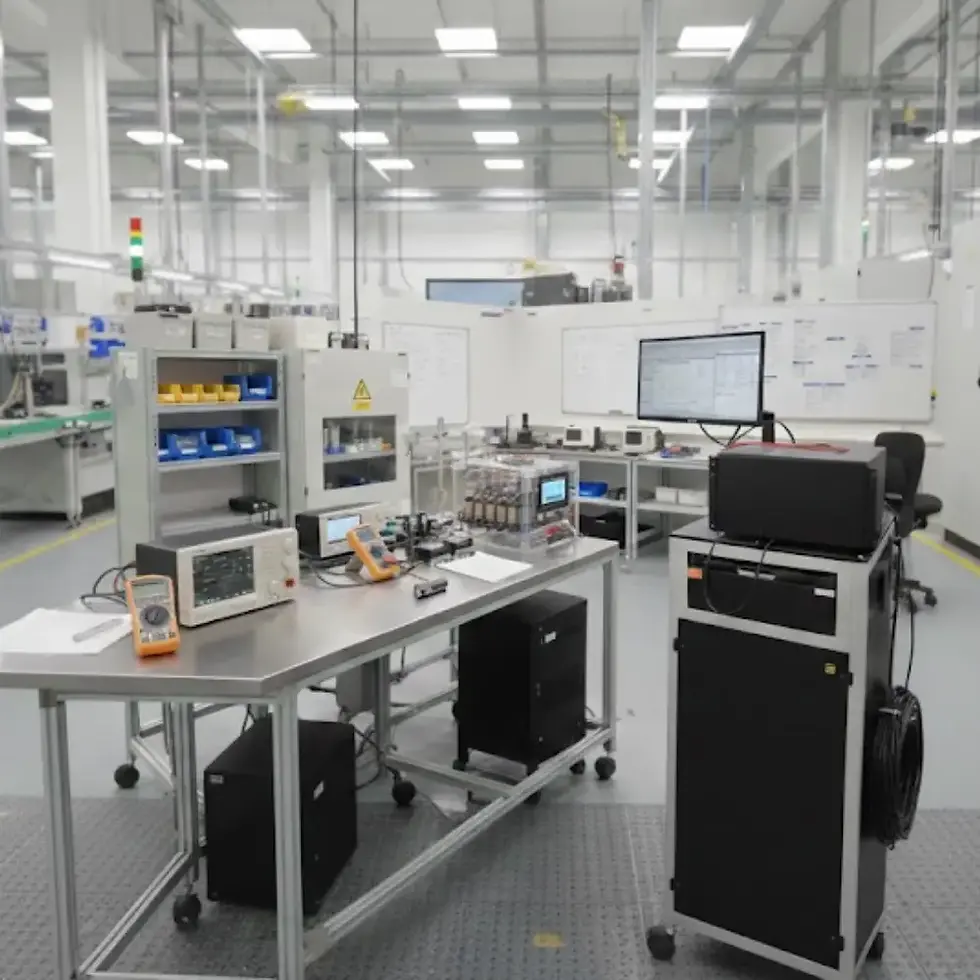
Battery Test Coverage for Lab and Production
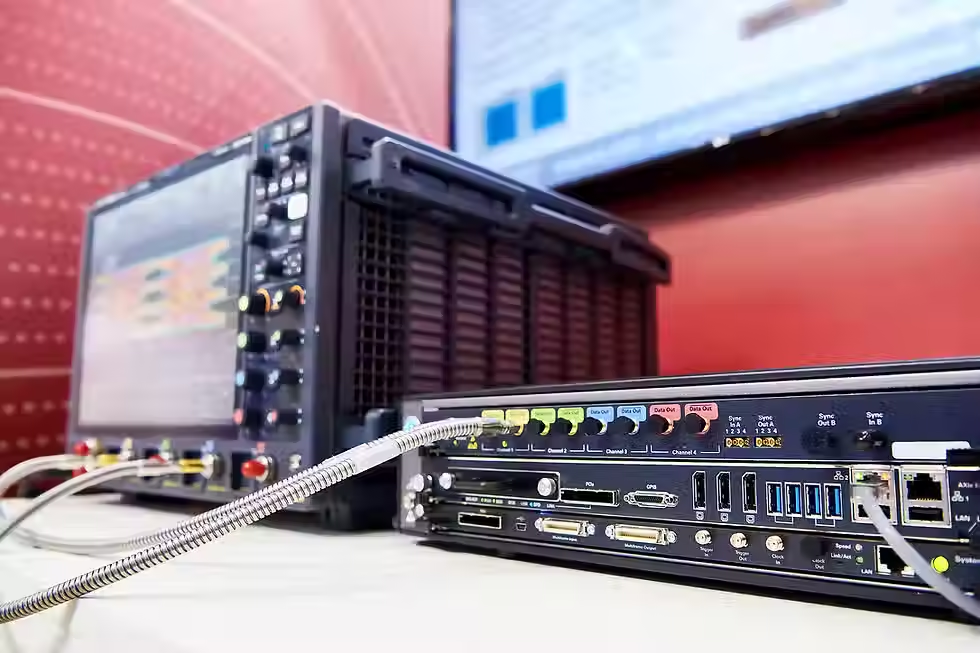.avif)
Custom AWG for Semiconductor Process Technology
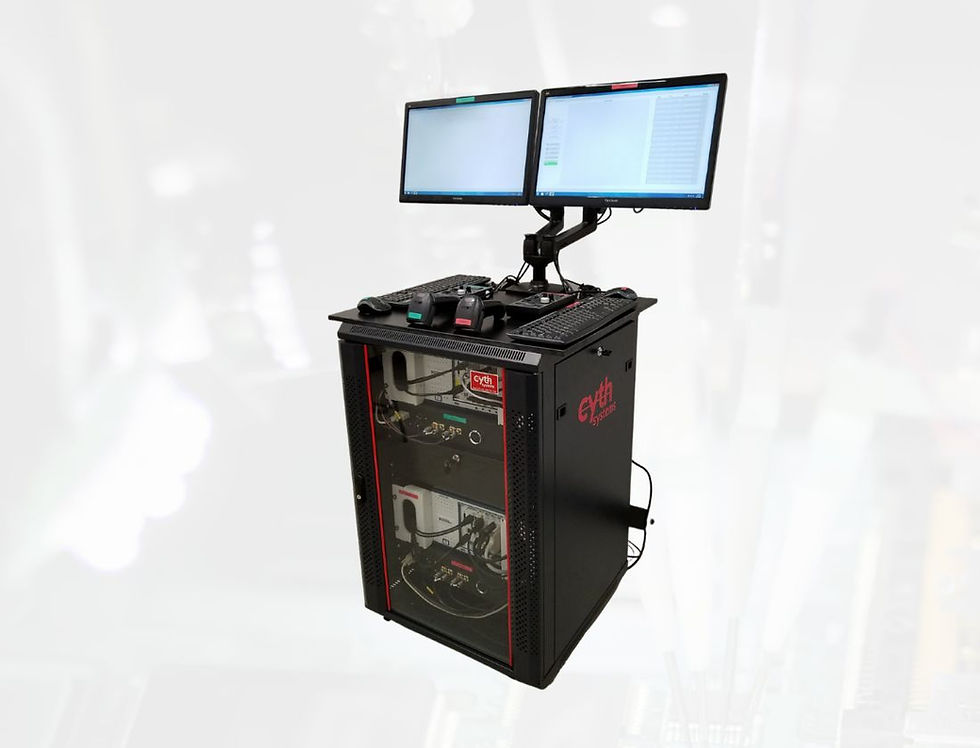
FCT and EMF Test Automation System
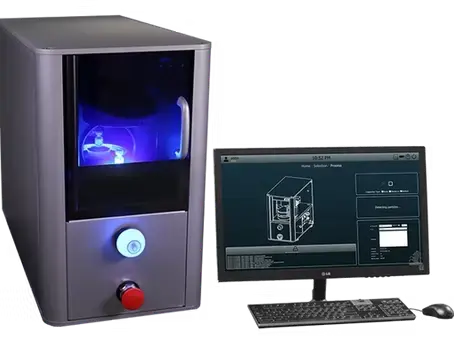
Micron-Scale Device Vision Inspection
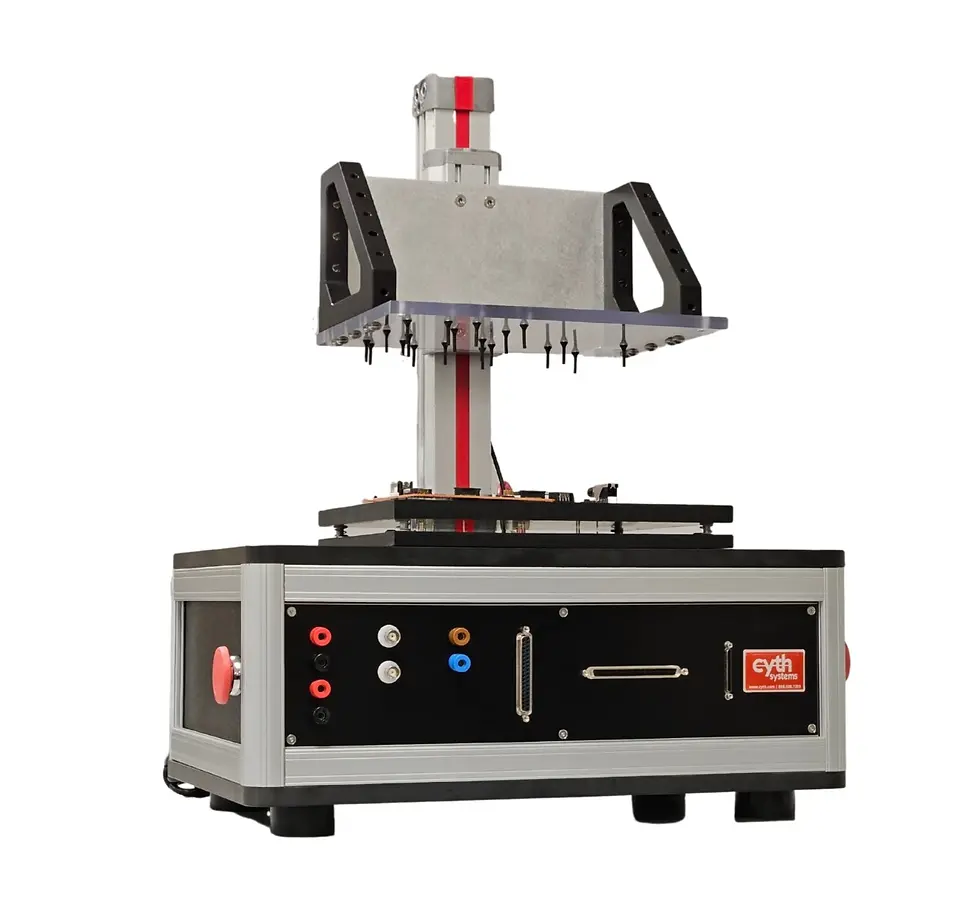
PCB Test Station integrating Bed of Nails Fixturing & cRIO
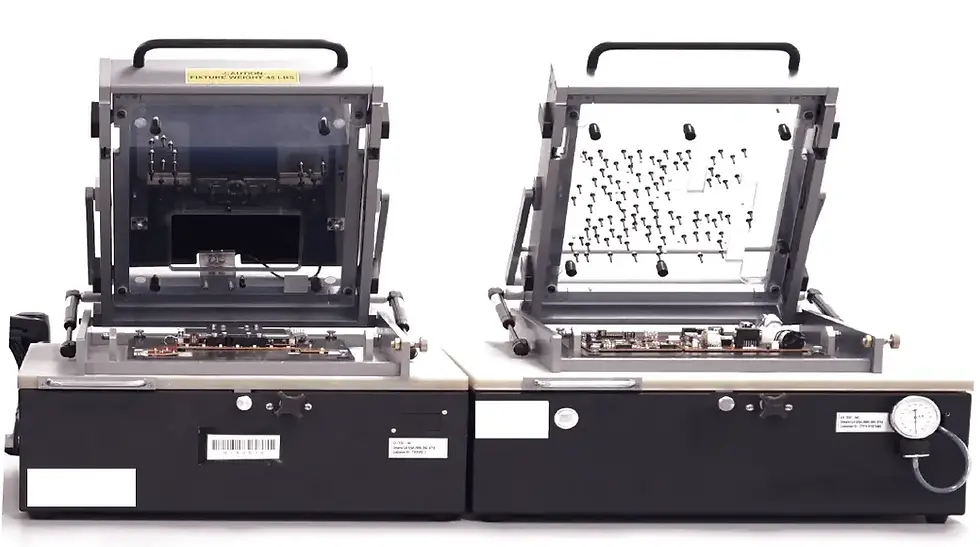
PCBA and Assembly Manufacturing Test for FDA Compliance

Power Plant Asset Health Monitoring with NI CompactDAQ

Rocket Sled Testing with CompactRIO-based DAQ & Control

Synchronized System Improves Piston Prover Accuracy and Standards Traceability

Build your system. We're here to help.
Precision automation for test, control, and performance-critical applications.