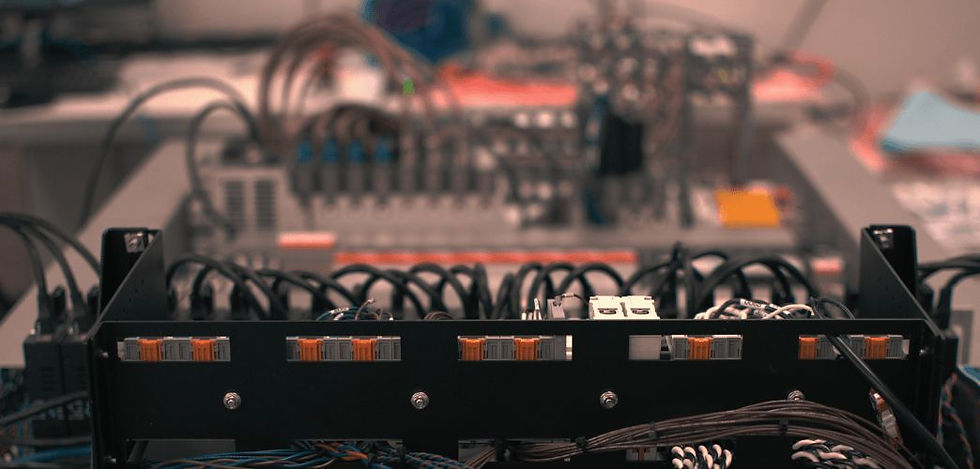
Rocket Sled Testing with CompactRIO-based DAQ & Control
Global engineering services firm validated propulsion system with a ruggedized, field-deployed data acquisition and thrust control solution built on NI cRIO and LabVIEW.

Project Summary
A global engineering services firm engaged Cyth Systems to design and deliver a turnkey data acquisition and valve control system for a defense end customer's rocket sled program. The solution synchronizes 48 channels of mixed sensor types on a single CompactRIO platform, supports both manual component commanding and fully automated test sequences, and operates from an IP66-rated enclosure mounted directly on the sled — with operator control extending over cabled Ethernet to a control center half a mile from the test track.
System Features & Components
48-channel mixed-signal measurement system built on NI cRIO-9047 controller with Ethernet expansion chassis: thermocouples, RTDs, 4–20 mA pressure and position sensors, ±10V BNC tri-axis accelerometers, and 250 kHz high-frequency pressure transducers
Multifunction application software bridging calibration, pretest configuration, and live test execution for operational clarity and safety
Automated redline shutdown and configurable blueline warnings with live P&ID-based operator display and valve state monitoring
Distributed actuation architecture coordinating nine solenoid valves and two proportional motorized valves through the same control platform
IP66-rated sled-mounted enclosure with physical E-stop cutting power directly to all actuators, monitored by a dedicated digital input
Outcomes
By consolidating data acquisition, valve control, and test sequencing onto a single NI CompactRIO platform, the customer's test team gained a repeatable, safety-validated capability grounded in abort logic designed specifically for the rocket sled environment. Operator control extended half a mile from the sled, with signal integrity maintained across all high-frequency channels.
Technology at-a-glance
NI 9149 Ethernet expansion chassis
NI C Series I/O modules:
IP66-rated field enclosure with cable gland wiring ingress
Ethernet networking across distributed interfaces
NI LabVIEW Real-Time
NI LabVIEW FPGA
Synchronized DAQ for rocket sled testing
Rocket propulsion testing has one of the most extreme and demanding environments in engineering. A rocket sled is a ground-based test platform that accelerates along a track at high speeds to simulate extreme or hazardous environments. Test sleds subject every component on board to simultaneous mechanical shock, vibration, thermal stress, and rapid pressure transients. Capturing meaningful data across all those phenomena, at the same time, on hardware that rides the sled itself, is a systems integration challenge that most data acquisition platforms are not designed to meet.
The potential consequences for personnel and assets make reliable abort logic a safety-critical part of any instrumentation system operating in such an environment. This means the data acquisition system is an active participant in test safety.
Cyth Systems was engaged by a global engineering services firm to design and deliver a turnkey data acquisition and control system for a defense end customer’s rocket sled program. The solution required synchronized data across 48 channels of mixed sensor types, control of a distributed valve network, and it needed to fit into an enclosure small enough, and light enough, to be mounted directly on the test sled.
Mixed signals, harsh environment
The core engineering challenge was synchronized data acquisition and control. Rocket sled propulsion tests generate signals that span an enormous frequency range: slow-moving thermocouple and RTD readings alongside 4–20 mA pressure and position sensors, and at the high end, tri-axis accelerometers and high-frequency pressure transducers to capture transient events at up to 250 kHz. Delivering that synchronization on a single embedded platform required deliberate decisions at every layer: hardware selection, chassis architecture, and software timing.
The system also needed real-time control to support critical safety processes. A test abort sequence would be triggered by over conditions, high-speed measurement monitoring and control that commands a shutdown the moment a parameter exceeds a defined limit.

Despite the complexity of measurement and control, the user interface needed to be simple and readily navigable during such high-stakes testing. Test operators would be stationed at a control center half a mile away from the test sled and needed a simple UI to streamline critical operations and enable quick responses.
Embedded dataloggers for field applications
The physical deployment environment also imposed challenging constraints. The system enclosure needed to be IP66-rated, weigh under 60 pounds, and survive the shock and vibration of an active test sled. With a substantial investment in engineering labor, DAQ hardware, fixturing, etc., virtually no risk of the enclosure failure could be tolerated.
Unifying DAQ and control with NI CompactRIO
Cyth designed and delivered a complete turnkey system built around the NI cRIO-9047 and an NI-9149 expansion chassis, populated with C Series I/O modules to address the measurement requirements across various sensor types. The heterogeneous architecture of the NI CompactRIO (cRIO) platform, combining a real-time processor with a user-programmable FPGA, enabled simultaneous high-speed data acquisition and deterministic control logic on a single embedded platform.

Cyth matched every sensor type and bandwidth requirement to the appropriate C Series module, with the full chassis configuration validated before a single line of code was written. The system supported 48 channels of thermocouples, RTDs, 4–20 mA pressure and linear position sensors, ±10V BNC tri-axis accelerometers, and 250 kHz high-frequency pressure transducers, on a single synchronized platform.
Cyth’s architecture leveraged the same NI cRIO hardware for the coordination of nine solenoid valves and two proportional motorized valves through a distributed actuation architecture, with all outputs coordinated through the same LabVIEW state-machine governing the test sequence.
The operator software was built as three distinct LabVIEW interfaces:
Calibration and valve timing interface for pre-deployment setup
Pretest configuration interface for entering run parameters including redline and blueline thresholds
Live test display modeled on the customer's own P&ID layout, showing real-time sensor readings, valve states, and a range status tree-of-lights.
A single-button abort is always present on the live display, with redline breach triggering automated shutdown without operator intervention. From that same interface, all data streams over cabled Ethernet from the sled-mounted DAQ box to a field shed 60 feet away and onward to a control center half a mile from the test track.
Mixed-signal synchronization, safety logic, and field validation
Hardware Selection
The project began with a detailed system requirements review against the customer's I/O specification anP&ID documentation. The instrumentation selection process started from the measurement requirements outward, matching each sensor type and bandwidth requirement to the appropriate C Series module, then validating that the combined NI cRIO chassis configuration could sustain synchronized acquisition across all channels under the expected load.
Software Architecture
The software architecture was designed with test operations in mind from the start. Rather than building a monolithic application, Cyth structured the LabVIEW code as a state machine with clearly separated operational modes, calibration, pretest configuration, and live test execution. This separation meant that operators could work through pre-test procedures in a dedicated interface without any risk of inadvertently affecting live test parameters, and that the live display could be purpose-built for clarity under pressure rather than cluttered with configuration controls.
Safety Logic
A deliberate architecture determined how the NI cRIO’s processing layers were utilized.
RTOS: Safety logic runs on the real-time layer, where redline and blueline thresholds are evaluated within a timed structure, with a distinct set of thresholds for each test state.
FPGA: The FPGA is dedicated exclusively to data acquisition, leveraging its deterministic timing for high-speed signal capture.
Windows OS: Threshold values are configured by the test operator on the user interface and then pushed to the real-time data structures at runtime to ensure that the active safety envelope always matches the current phase of test

A safety-critical, manual test abort was enforced through a physical emergency stop (E-stop) to directly cut power to all actuators. A dedicated digital input continuously monitored the E-stop line. When engaged, the software responded in accordance with the active state at the time of abort, either returning to the startup state or executing a controlled shutdown sequence.
Enclosure Design
The enclosure design required balancing protection against weight. The IP66-rated enclosure houses the cRIO-9047, the NI-9149 expansion chassis, and all associated signal conditioning hardware, with cable glands managing all sensor and valve wiring ingress. The final assembly had to meet the 60 pound weight limit while surviving the mechanical environment of an active sled run.
Factory Acceptance Testing
Performance of factory acceptance testing (FAT) with limited access to the defense end-customer’s hardware necessitated the simulation of position feedback from the three range sensors. The control software relied on position feedback from three range sensors, but with access to only a single range sensor throughout development, the averaged three-sensor signal the production system would use was implemented on Cyth’s engineering floor. This was accomplished by pointing the sensor at a wall and physically adjusting its angle, then sweeping the full range of expected position values and using that single sensor’s output to stand in for the two simulated outputs. This approach enabled full loop control, including redline evaluation and abort logic, to be exercised against realistic input conditions before connecting to any of the defense customer’s hardware.
System validation was performed in-house using hardware-in-the-loop (HIL) simulation before onsite deployment, allowing the Cyth team to exercise the full test sequence, including redline abort logic, against simulated sensor inputs prior to integration with the customer's hardware.
At the time of publication, the system has completed FAT and been delivered to the global engineering services customer. Onsite commissioning, including connection to the full valve and sensor complement and integration with the sled, is planned for the next phase of this project. Once commissioned, additional simulation and validation will precede live sled runs.
Designed for the sled, validated for the mission
The delivered system provided the defense customer's test team with a single, unified NI CompactRIO system for managing data acquisition, valve control, and test sequencing. The P&ID-based operator interface gave test operators an immediately familiar visual reference, purpose-built for clarity during live test execution.
The ruggedized, sled-mounted enclosure eliminated the need for long sensor cable runs back to a remote DAQ system, reducing signal integrity risk on the high-frequency channels and simplifying the overall system architecture.
For defense program contractors operating in high-stakes propulsion test environments, instrumentation reliability is a direct input to program confidence. By deploying a ruggedized, fully integrated DAQ and control system purpose-built for the rocket sled environment, the customer's test team gained a repeatable, safety-validated platform that can support multiple test campaigns without rebuilding the measurement architecture from scratch. The result is a test capability the customer can rely on across multiple campaigns, grounded in safety logic that was designed and validated specifically for this environment.
Related Posts
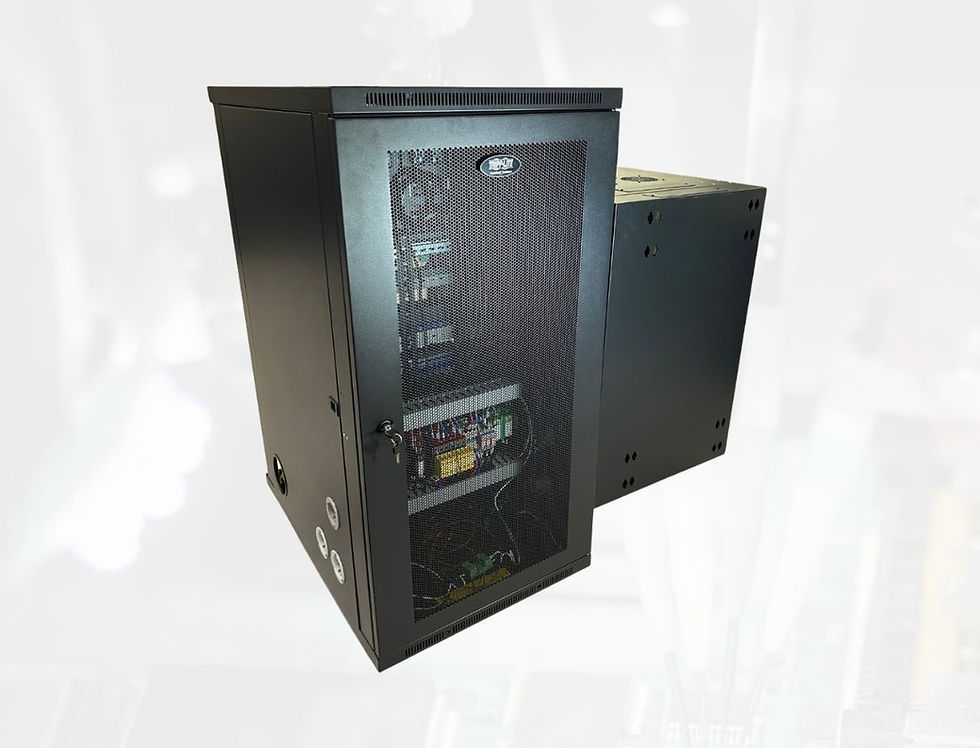
Automated End-of-Line Test System for High-Power Load Banks

Automated Quality Control for Material Deposition with LabVIEW
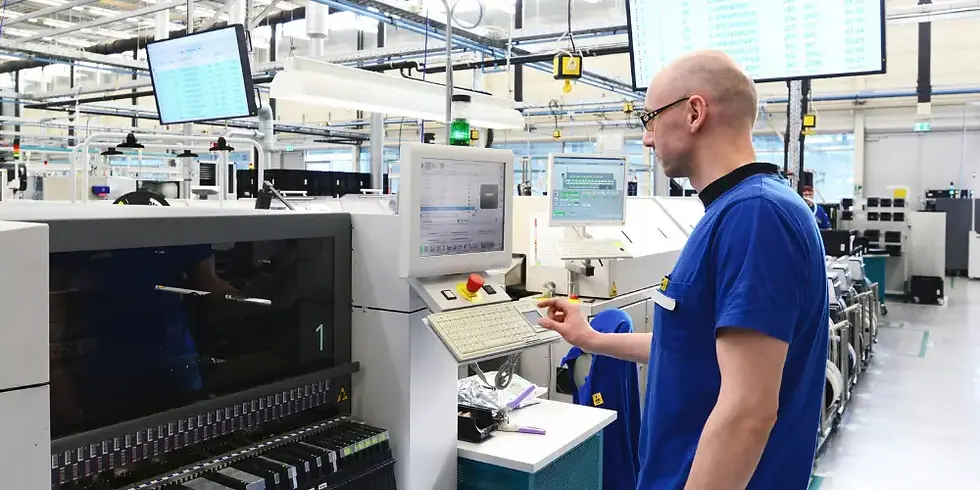
Automated Test Expansion for Electronics Manufacturing
Battery Test Coverage for Lab and Production
.avif)
Custom AWG for Semiconductor Process Technology
FCT and EMF Test Automation System
Micron-Scale Device Vision Inspection
PCB Test Station integrating Bed of Nails Fixturing & cRIO
PCBA and Assembly Manufacturing Test for FDA Compliance
Power Plant Asset Health Monitoring with NI CompactDAQ
Rocket Sled Testing with CompactRIO-based DAQ & Control

Synchronized System Improves Piston Prover Accuracy and Standards Traceability

Build your system. We're here to help.
Precision automation for test, control, and performance-critical applications.